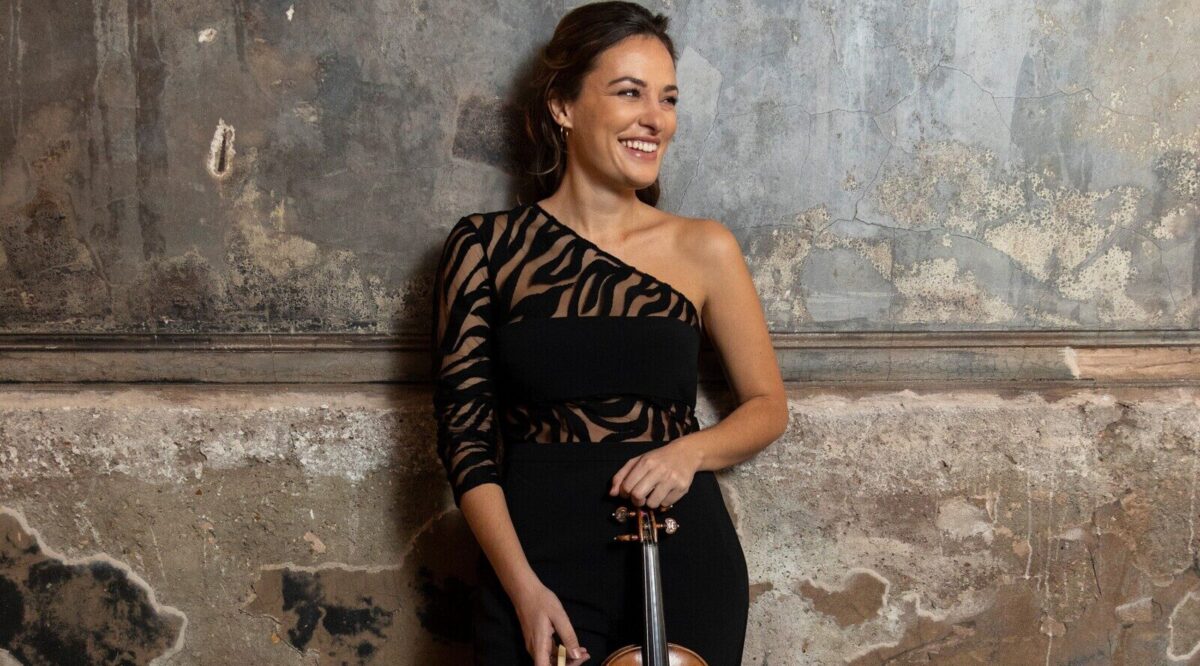

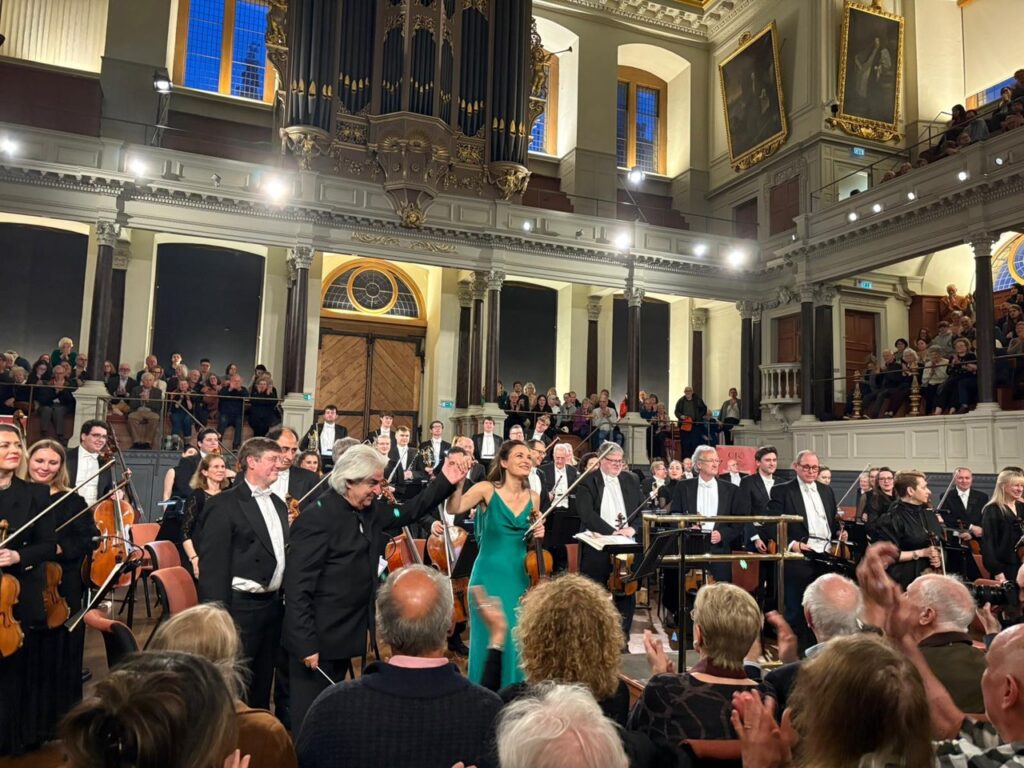
When Nicola Benedetti walked onstage to perform with the Oxford Philharmonic Orchestra the sunset was fading through the windows of The Sheldonian, glowing and darkening at once, as if the building itself were preparing for something magnificent.
Benedetti, the world famous Scottish violinist, then appeared in an ethereal green dress, charismatic and immediately commanding, the warmth between her and the orchestra visible from the very first moment, an artist arriving to openly converse.
And what a conversation it proved to be, Benedetti playing with a virtuosity that was almost superhuman, and yet the feeling she drew from the music was entirely, achingly human, and those of us fortunate enough to be present will not forget it in a hurry.
Presented in collaboration with the Oxford Festival of the Arts, whose theme this year Signs, Signals….& Secrets Check out our top OFA picks here perfectly matched Elgar’s Violin Concerto in B minor, Op. 61, it written with a mysterious Spanish inscription on the manuscript: “Herein is enshrined the soul of….”
Thus, the concert began not with music but with words. Sir Nicholas Kenyon taking to the stage for a short pre-concert talk exploring Edward Elgar under the compelling heading of “The Great English Progressivist”, a generous reframing of a composer too often seen through the narrow lens of imperial nostalgia, the perfect introduction to the rousing concert which followed
The support Benedetti received was masterful throughout, first Concertmasters Tamás András and Carmine Lauri leading with authority and evident joy, while Peter Adams and Mats Lidström offered beautiful, complementary support.
The shimmering sections in the slow movement were elevated to an almost spiritual level, and a particular mention must go to Uxia Martinez Botana on double bass, whose physical commitment to the performance was remarkable to witness. The incomparable Tristan Fry on solo timpani, contributed great surges of feeling to the concerto, ensuring it was as precise as it was powerful.
After the interval the orchestra returned for Elgar’s Enigma Variations, Op. 36, and here maestro Dr Marios Papadopoulos conducted entirely from memory, free to hold a full and eloquent conversation with the musicians around him.

Elgar claimed to have hidden a musical puzzle deep in the heart of his Variations and the work has never entirely relinquished its secrets, but what it gives freely and generously is something rarer still: 14 musical portraits of real people, alive with affection, humour and private meaning.
The first Concert Masters faced each other at moments across the strings, smiling with sheer pleasure, the music transporting us somewhere else entirely.
Always at the heart of the Enigma Variations, IX, “Nimrod” is a portrait of Elgar’s closest friend A.J. Jaeger, recalling a long summer evening walk when Jaeger described the sublimity of Beethoven’s slow movements to a composer in despair. Played here with full orchestral warmth and gathered, unhurried nobility, it was the emotional centre of the evening and it earned every measure of silence that followed it.
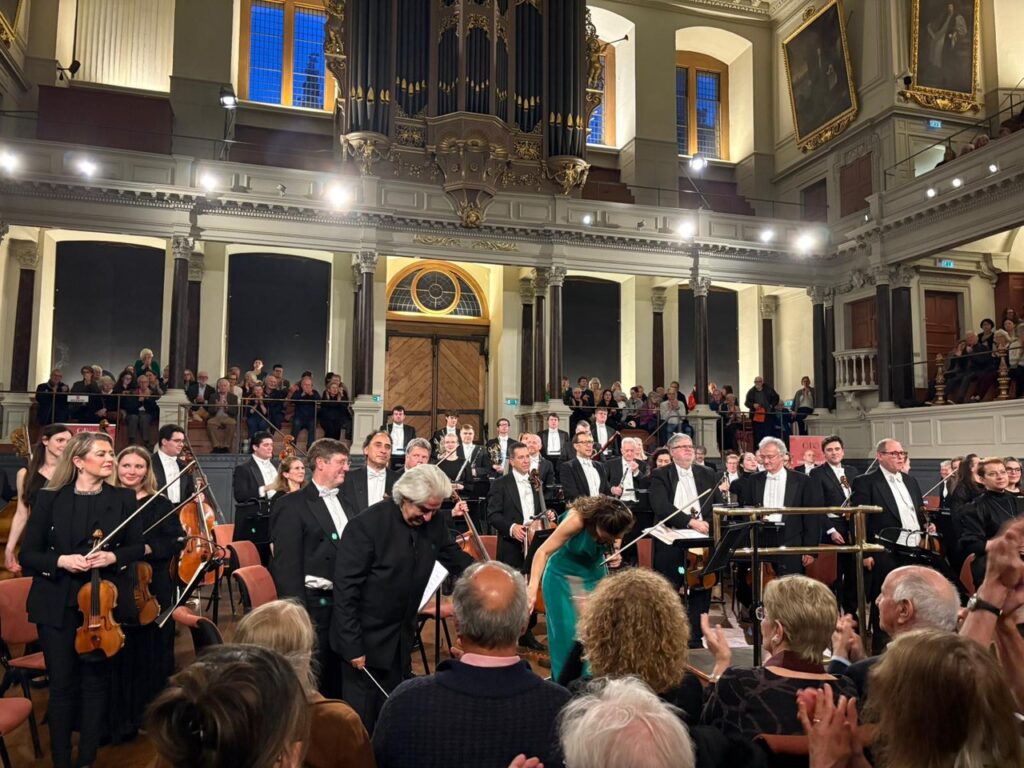
The flutes were sensational throughout the variations, the brass section perfectly rousing and the percussion under Fry unfailingly judged. The finale, Elgar’s own self-portrait woven together with the theme of “Nimrod” and the opening portrait of his beloved wife Alice, arrived with the force of something both inevitable and entirely fresh.
The long, loud applause and ovation was unequivocal. There was no encore but Dr Papadopoulos took care to thank every individual player and section and the warmth of that gesture felt entirely right: an evening built on human generosity deserved to end in it.
As we filed out into the Oxford night, looking up one last time at the Sheldonian’s glorious painted ceiling with its cherubic heavens, it was entirely natural to feel that music is transcendent and that Elgar, for all his melancholy, restraint and English diffidence, understood something about the human capacity for beauty, which the orchestra and celebrated Scottish soloist had celebrated in style.
Catherine Davies
For further details on the Oxford Philharmonic Orchestra and their forthcoming concerts visit www.oxfordphil.com
Oxford Festival Of The Arts runs until July 12. For more details go to https://artsfestivaloxford.org/whats-on/