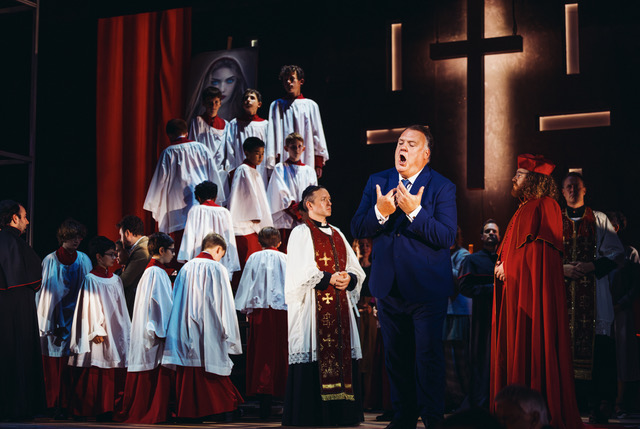

There are debut productions and then there are statements of intent. Oxford International Opera’s Tosca at the New Theatre Oxford last night was emphatically the latter: a bold and viscerally unsettling evening of opera, the atmosphere crackling with anticipation before a single note had been played.
Maestro Marios Papadopoulos conducted the Oxford Philharmonic Orchestra in OIO’s introductory performance, while THE Sir Bryn Terfel, as Artistic Director, delivered the role of Scarpia, bringing his immense theatrical intelligence and warm Welsh vowels to bear throughout.
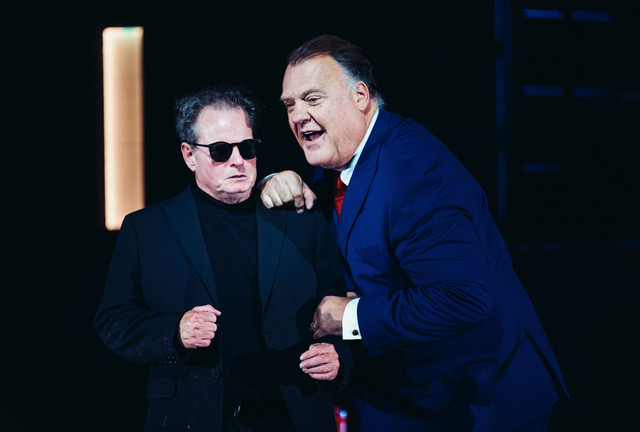
His acting is second to none, his command of the stage and ability to fill a room with presence and intent remains undimmed and was a privilege to witness.
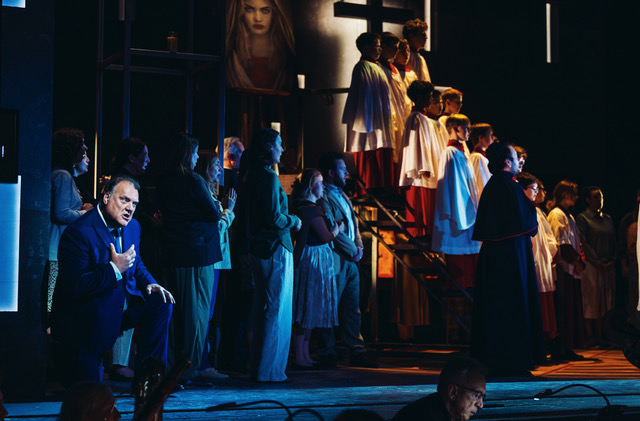
Director P Burton-Morgan transplanted the opulent story into a brave new world for Tosca, that felt bracingly contemporary with dark, imposingly hard, brutalist sets
Although playing at a slower tempo than required in places, the orchestra was in splendid form. The cello section was a particular standout and in Act III, an extraordinary moment arrived when Laura Ruiz Ferreres appeared on stage among the performers to deliver the solo clarinet passage.
It divided opinion: the audience members behind us were quite vocal in their scepticism, feeling it an unnecessary theatrical device during a moment of considerable musical intensity. For others it was entirely right for a production unafraid to take risks.
The production moved through its three acts with gathering and relentless intent What began in Act I with the lightness of the slightly under powered young choristers from Radley College grew progressively darker and more arresting until, by Act III, ice-cold masked agents in jackboots moved through the ramparts in a sequence of cold and methodical horror. Perhaps not one for the purists then.
ice-cold masked agents in jackboots moved through the ramparts in a sequence of cold and methodical horror
For those who haven’t seen it, Puccini’s Tosca is set across a single day in Rome, in three locations. Director P Burton-Morgan transplanted the opulent story into a brave new world for Tosca, that felt bracingly contemporary with dark, imposingly hard, brutalist sets in black and red, designed by Anthony Lamble, which were deliberately unsettling and reminiscent of 20th century authoritarian regimes, asking us to look at the world we live in.
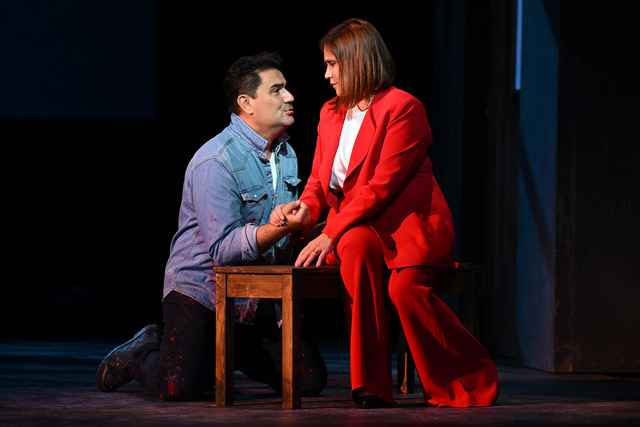
Saimir Pirgu as Cavaradossi was tender and ardent in equal measure, his lyric tenor carrying the great arias with warmth and considerable distinction. But it was the character of the Trumpian Scarpia around whom the evening’s darkest energy gathered. Played with towering menace, he was every inch the modern tyrant: physically imposing, using his considerable height to dominate every scene.
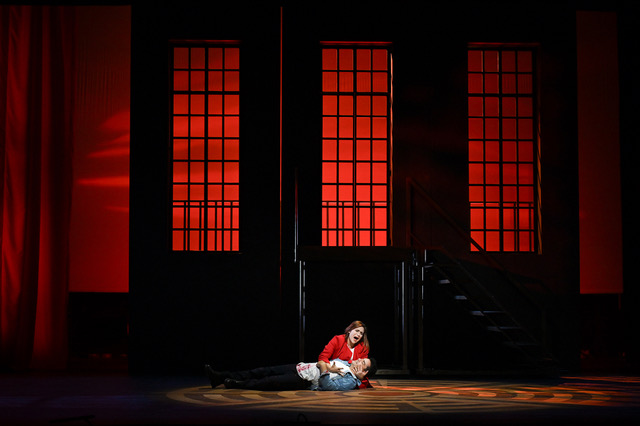
Carmen Giannattasio as Tosca sang with such strength and controlled anguish
And then there was Carmen Giannattasio as Tosca herself, who sang with such strength and controlled anguish, even while lying on the floor, that even the back of the stalls received every note with the full force of everything Puccini intended. Her Vissi d’arte, vissi d’amore was simply devastating, the Act II scenes between Tosca and Scarpia almost unbearable to watch.
There are no winners in this story. There never were. A world where corruption and the abuse of power go unchecked, destroys everyone in its path. 19th century Rome and the world we inhabit in 2026 are, it turns out, not as far apart as we might wish.
19th century Rome and the world we inhabit in 2026 are, it turns out, not as far apart as we might wish
So bravo to Sir Bryn Terfel and to Marios Papadopoulos for the ambition of this venture, and to P Burton-Morgan for a production bold enough to make its mark.
Tosca is at New Theatre Oxford on September 26. https://oxfordphil.com/additional_event/tosca/
Catherine Davies
For more on Oxford Philharmonic go to https://oxfordphil.com